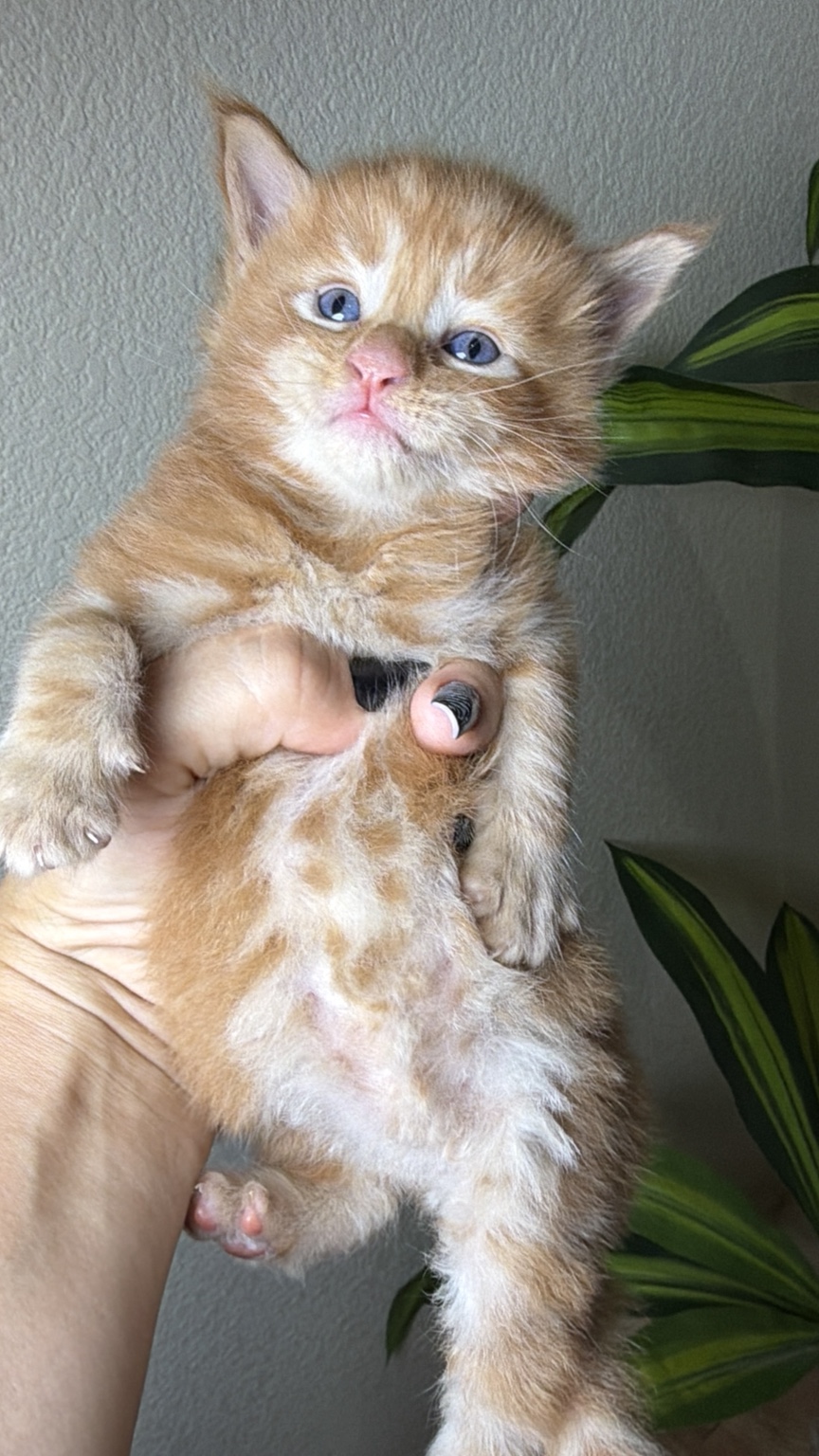
Start with one quiet area
Prepare a quiet room or a smaller part of the house for the first few days. Place the kitten's litter box, food, water, bed, and a scratching post where they are easy to find. Once the kitten is comfortable and using everything reliably, you can gradually open more of the home.
Keep food and litter familiar
A sudden change in both the home and the daily routine can be stressful. We recommend beginning with the same food and the same type of litter the kitten already knows. Our kittens are raised using natural pine pellets. If you later choose something different, make the transition gradually.
Choose stable bowls
Kittens play with almost everything, including their dishes. We use bowls with a base about as wide as the top so they are difficult to tip over. A small shallow dish works well for wet food. We provide fresh filtered water in a stable bowl, rinse the bowl, and replace the water every day.
Give them a safe place to scratch and climb
A small scratching post can work while the kitten is young, but Maine Coons grow into large, strong cats. For long-term use, choose a sturdy post or cat tree with a wide base, large platforms, and no wobbling. Secure tall furniture or cat trees to the wall when possible.
Kitten-proof the rooms
Put away string, thread, hair ties, small objects, and anything else a kitten could swallow. Secure loose cords, check window screens, and keep household chemicals and unsafe plants out of reach. Remember that a curious Maine Coon kitten can climb higher than you expect.
Have a carrier ready
Keep a secure, well-ventilated carrier available for the trip home and future veterinary visits. Leave it open in the kitten's room for a while so it becomes a familiar resting place instead of appearing only before travel.